Overview
Our pediatric neurosurgeons are committed to providing compassionate, patient-centered care for children and their families. We take pride in being empathetic, communicative physicians who guide families through every step of diagnosis and treatment.
As specialists in the developing brain, spine and peripheral nervous system, we diagnose and treat a wide range of conditions that require surgical expertise. Through the Children’s Hospital of Richmond at VCU (CHoR), we provide surgical consultations before birth and surgical interventions immediately after birth, continuing through infancy and into young adulthood.
Clinical Care
Our team specializes in the diagnosis and surgical treatment of conditions affecting the developing brain, spine and peripheral nerves. We provide comprehensive neurosurgical care for infants, children, adolescents and young adults, tailoring treatment plans to each patient's unique needs.
Our team cares for patients with:
- Brachial plexus injuries
- Brain tumors
- Cerebral cysts
- Cerebral palsy
- Chiari malformation
- Craniofacial conditions
- Craniosynostosis
- Hydrocephalus
- Seizures that are uncontrollable
- Spina bifida
- Spinal lipoma
- Spinal tumors
- Syringomyelia
- Tethered spinal cord
- Trauma to nerves or plexus
- Traumatic brain injury
- Traumatic spinal injury
- Vascular malformations
- Minimally invasive craniosynostosis surgery
- Surgical management (selective dorsal rhizotomy) of spastic diplegic and quadriplegic patients
- Endoscopic surgeries to cure hydrocephalus without shunts
- Endoscopic brain tumor surgery
- Minimally invasive interstitial laser ablation for tumors and seizures
- Narrow corridor interfascicular subcortical surgical techniques
- ROSA robotic epilepsy surgery and electrode placement
Research
Our pediatric neurosurgery research program is focused on improving care for children with disorders of the brain, spine and nervous system. Through clinical innovation, advanced surgical techniques and multidisciplinary collaboration, we strive to develop safer, more effective treatments that improve outcomes and quality of life for children, families and caregivers.
The Hydrocephalus Clinical Research Network (HCRN) is a nationwide collaboration of pediatric neurosurgeons and researchers dedicated to improving care for children with hydrocephalus. By working together across leading children's hospitals, the network conducts large-scale research studies that advance treatment options, improve patient outcomes and address challenges that cannot be effectively studied at a single institution. Pediatric neurosurgeons at Children’s Hospital of Richmond at VCU (CHoR) are active participants in this collaborative effort. Current areas of research include shunt technology, minimally invasive treatment approaches and the care of infants affected by intraventricular hemorrhage.
Learn more about the Hydrocephalus Clinical Research Network:
https://www.hcrn.org/history
This study seeks to better understand why shunts become blocked or fail in children and young adults receiving treatment for hydrocephalus. By analyzing shunt components and cerebrospinal fluid collected during surgery, researchers are working to identify the biological and mechanical factors that contribute to shunt malfunction. The knowledge gained from this research may help improve treatment strategies, reduce complications and enhance long-term outcomes for patients with hydrocephalus.
Who Can Participate?
Patients younger than 26 years of age diagnosed with hydrocephalus who are undergoing shunt revision or shunt externalization surgery.
What Does Participation Involve?
Researchers analyze shunt components and cerebrospinal fluid (CSF) collected during surgery that would otherwise be discarded.
Purpose
The goal of this research is to identify the causes and mechanisms of shunt obstruction and failure in hydrocephalus treatment. By better understanding how and why shunts fail, researchers hope to improve patient care, reduce complications and support the development of more effective treatment strategies.
The Limbrick Lab, led by David Limbrick, MD, PhD, focuses on improving the diagnosis, treatment, and long-term outcomes of children with hydrocephalus, craniosynostosis, Chiari malformation and syringomyelia. Through basic science and clinical research, the lab seeks to better understand the biological processes that contribute to these conditions while developing evidence-based treatment strategies. Recent work includes a landmark study on Chiari I malformation and syringomyelia that has helped guide surgical decision-making for children and young adults. Additional research explores hydrocephalus treatment, craniosynostosis and other complex pediatric neurosurgical conditions.
Featured Publications
Explore selected publications from the Limbrick Lab covering hydrocephalus, Chiari malformation and syringomyelia, craniosynostosis and pediatric neurosurgical care.
- Decompression with or without Duraplasty for Chiari I and Syringomyelia
https://www.nejm.org/doi/full/10.1056/NEJMoa2402821 - Development of Shunt Valves Used for Treating Hydrocephalus: Comparison with Endoscopy Treatment
https://pubmed.ncbi.nlm.nih.gov/37354289/ - Spatial Regulation of Gene Expression in Nonsyndromic Sagittal Craniosynostosis
https://pubmed.ncbi.nlm.nih.gov/30215585/ - Hypophosphatemic Rickets and Craniosynostosis: A Multicenter Case Series
https://pubmed.ncbi.nlm.nih.gov/26824597/ - Minimizing Transfusion Requirements for Children Undergoing Craniosynostosis Repair: The CHoR Protocol
https://pubmed.ncbi.nlm.nih.gov/24877603/ - Management of Patients with Cochlear Implants and Ventriculoperitoneal Shunts
https://pubmed.ncbi.nlm.nih.gov/24144174/
Read more about the landmark U.S. trial comparing two common surgical treatments and its impact on patient care.
The Longitudinal Neurosurgical Tissue Repository collects and stores tissue and fluid samples from children and adults receiving neurosurgical care. These samples, which would otherwise be discarded during medical procedures, are preserved to support future research on neurological and neurosurgical conditions. By providing researchers with access to valuable biological samples, the repository helps advance discoveries that may improve diagnosis, treatment and patient outcomes.
Who Can Participate?
Children and adults receiving neurosurgical care.
What Samples Are Collected?
Both normal and abnormal tissue and fluid samples removed during surgeries or procedures that would otherwise be discarded. These may include brain tissue, spinal cord tissue and cerebrospinal fluid (CSF).
Purpose
The repository supports future research aimed at improving the understanding, diagnosis, and treatment of neurological and neurosurgical conditions. By preserving these valuable samples, researchers can investigate disease processes, identify potential therapies and improve patient outcomes.
This study seeks to better understand the genetic, molecular and cellular factors that contribute to congenital hydrocephalus and related neurosurgical conditions. By studying biological samples from affected individuals and their families, researchers hope to identify genes and disease mechanisms that influence how these conditions develop. Insights gained from this work may lead to improved diagnosis, more accurate disease classification and the development of new treatment approaches in the future.
Who Can Participate?
Individuals of any age diagnosed with congenital hydrocephalus, as well as their unaffected relatives.
What Does Participation Involve?
Researchers may collect:
- Excess tissue removed during surgery that would otherwise be discarded
- Blood samples
- Buccal (cheek) swab samples
Samples may be collected from affected patients and, when appropriate, from unaffected family members.
The CHoR Pediatric Brain Tumor Biobank supports research by collecting and storing donated tissue samples from children with brain tumors and other neurological conditions. With informed parental consent, these samples are preserved for future studies aimed at improving diagnosis, advancing treatment options and increasing understanding of childhood neurological diseases. The biobank serves as an important resource for researchers working to develop new therapies and improve outcomes for children.
Learn more about the Pediatric Brain Tumor Biobank:
https://www.chrichmond.org/blog/details/chor-establishes-pediatric-brain-tumor-biobank-advancing-research-and-treatment-in-central-virginia
The Synostosis Research Group (SynRG) is a multi-institutional research collaboration dedicated to improving the understanding and treatment of craniosynostosis. By collecting and analyzing data from participating institutions, the network studies how children with craniosynostosis are diagnosed, treated and cared for over time. This collaborative approach helps researchers identify best practices, improve patient outcomes and develop future research studies. CHoR's pediatric neurosurgeons actively contribute to this important work.
SynRG Goals
- Characterize patient populations, including clinical presentation, management strategies and outcomes.
- Identify variations in care and outcomes across participating institutions.
- Conduct preliminary analyses to inform future research.
- Generate pilot data and hypotheses to support the development of focused research studies, including recruitment projections, sample-size calculations and power analyses.
Purpose
The goal of this research is to identify and study genes associated with congenital hydrocephalus and other neurosurgical disorders. Findings may improve disease classification, enhance diagnostic testing and support the development of more effective treatments in the future.
Education
Trainees in the residency program spend up to six months at CHoR, typically during PGY‑3, rotating on the clinical service and leading the pediatric neurosurgery inpatient service.
Training and service opportunities abroad
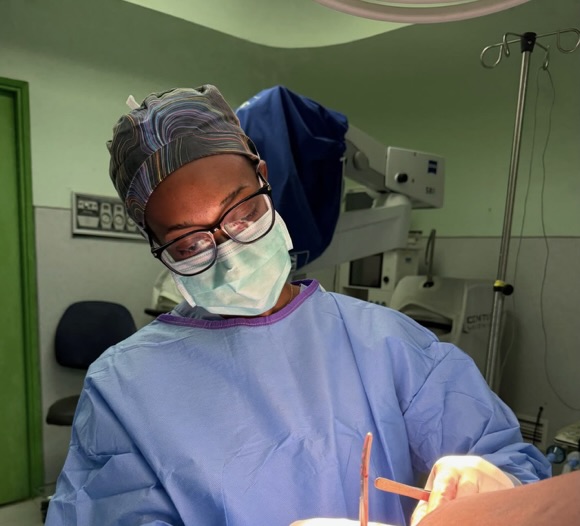
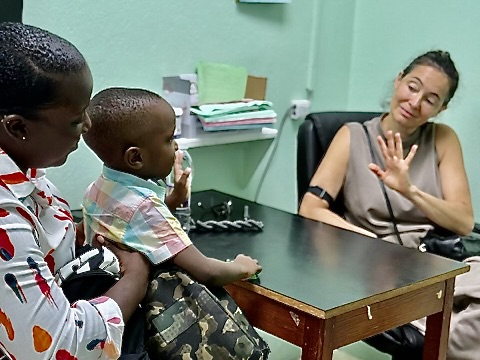
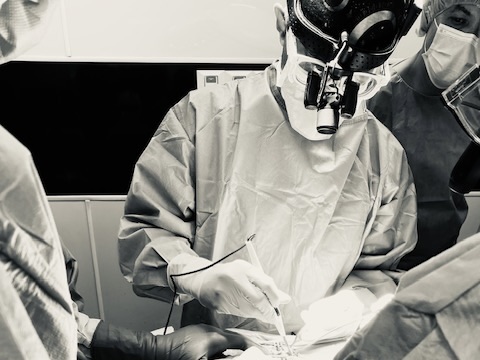
Optional mission trips provide hands-on pediatric experience, treating children with complex congenital conditions while building skills and compassion.

.jpg )